
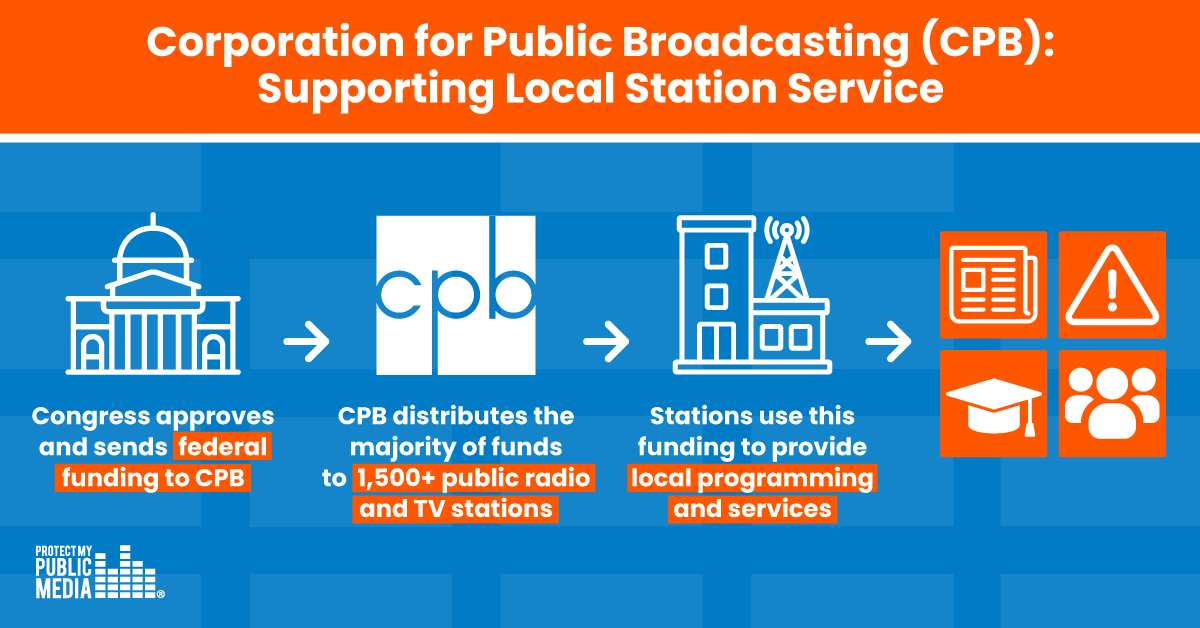
For decades, federal funding helped local public radio and television stations serve virtually every community with free, universally available programming and services. That support helped stations provide local journalism, educational resources, emergency alerts, cultural programming and other services that strengthen communities.
In 2025, Congress rescinded funding for the Corporation for Public Broadcasting (CPB), eliminating the core federal funding source local stations relied on for generations. CPB has since dissolved, leaving local public media stations without the federal support that helped make service to every community possible.
Protect My Public Media is now focused on restoring federal funding for local public media stations through the annual appropriations process.
What was the Corporation for Public Broadcasting (CPB)?
CPB was a private, nonprofit corporation created by Congress in the Public Broadcasting Act of 1967
CPB did not produce programming or own, operate or manage local public media stations. Instead, it distributed federal funding to local public radio and television stations and supported system wide services that helped stations serve their communities.
For generations, CPB served as the primary federal funding mechanism for local public media stations. That funding helped local stations provide free, noncommercial service to communities of all sizes, including rural, remote and underserved areas.
How CPB Funding Supported Local Stations
Under the Public Broadcasting Act, Congress provided CPB funding two years in advance, and CPB distributed those funds according to a formula set in law.
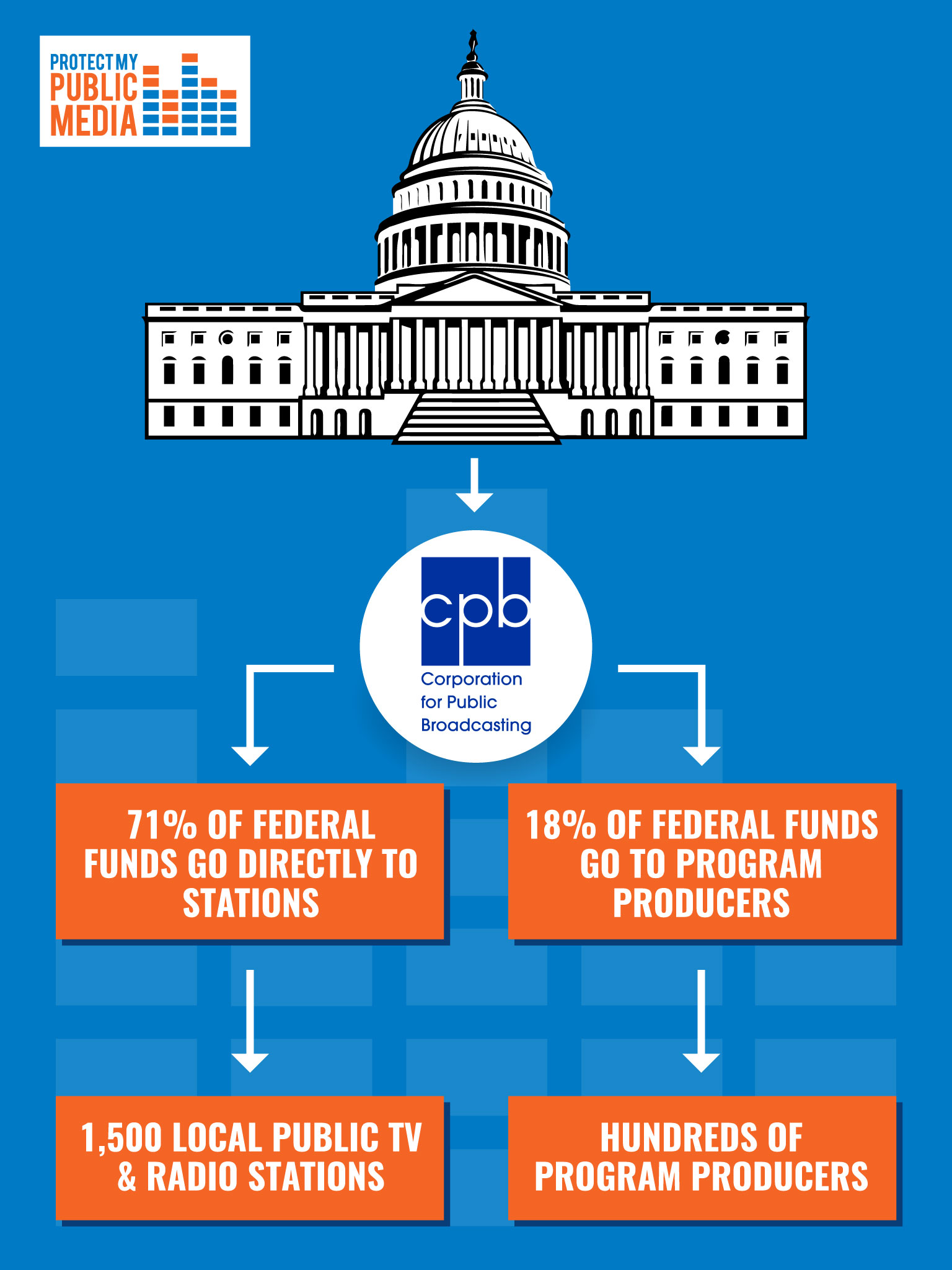
Most CPB funding went directly to local public radio and television stations. Stations used that support to produce local programming, provide community services in areas like news, education and public safety, purchase broadcast equipment and acquire programming for their communities.
The remaining funding supported programming, systemwide services and CPB operations, including investments in national programming, research, copyright fees and other shared initiatives that helped local stations serve their audiences.
That structure helped ensure that federal funding reached communities across the country, including rural, remote and underserved areas where local stations often rely more heavily on federal support. With CPB funding now eliminated, local stations have lost the core federal investment that helped sustain local service for generations.
Why Restoring Funding for Local Public Media Stations is Critical
As local media outlets close and consolidate, local public media stations are often among the last locally operated media organizations still serving their communities. They cover local issues, preserve local stories, support education, share emergency information and help residents understand what is happening where they live. When a station is forced to scale back or go off the air, the community risks losing local reporting, local connection, essential services and a trusted source of information that may not exist anywhere else.